
Process
From yarn to cloth, entirely by hand
Every piece passes through many hands before it becomes cloth. Here is what happens between the raw yarn and the textile that reaches you.
Choosing the yarn
01
Ordering and preparing the yarn
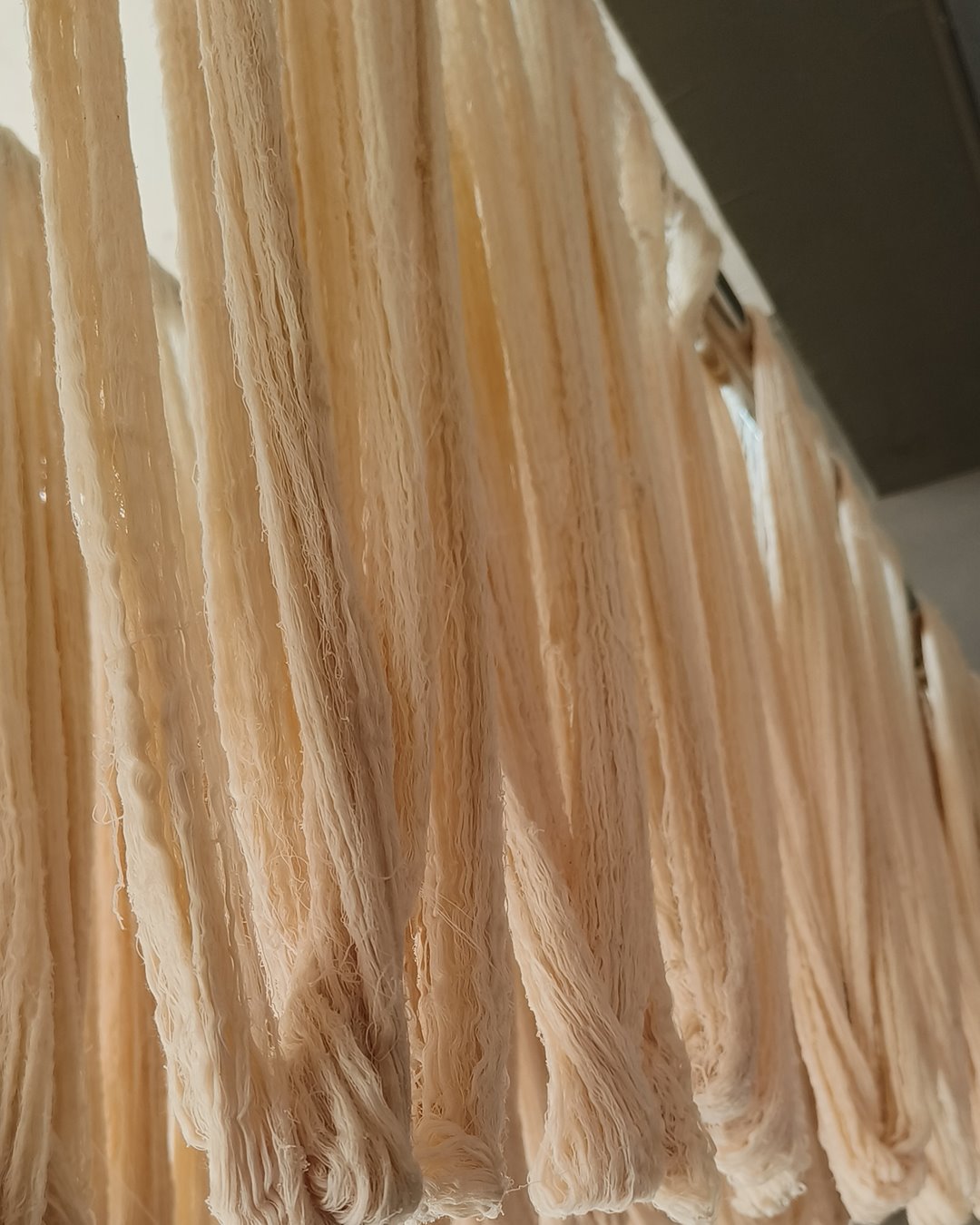
We begin by selecting and ordering the yarn according to the design, weave and colour requirements of each textile. Once the yarn arrives, it is carefully sorted according to the design and prepared for the dyeing process.
02
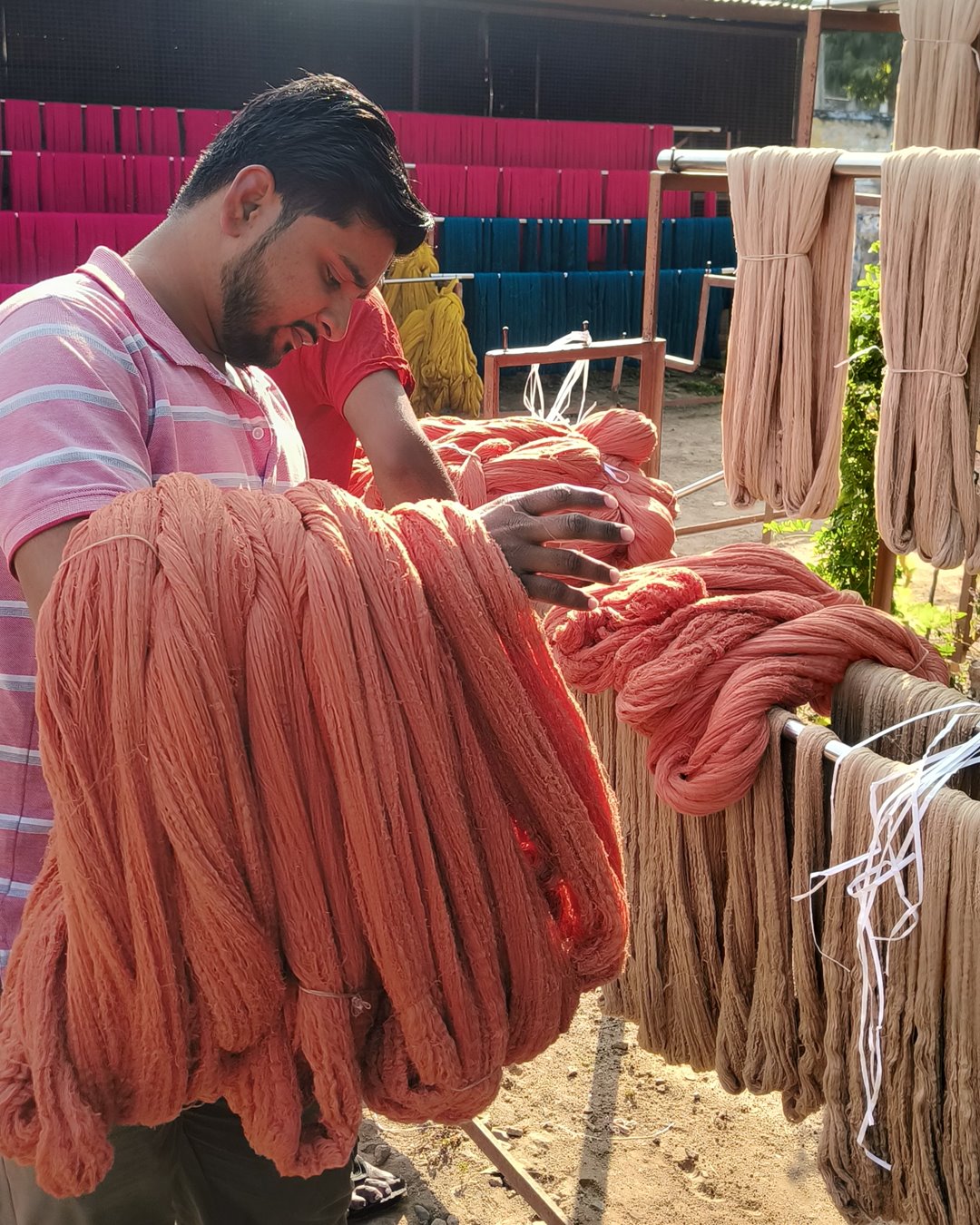
Hand dyeing and shade
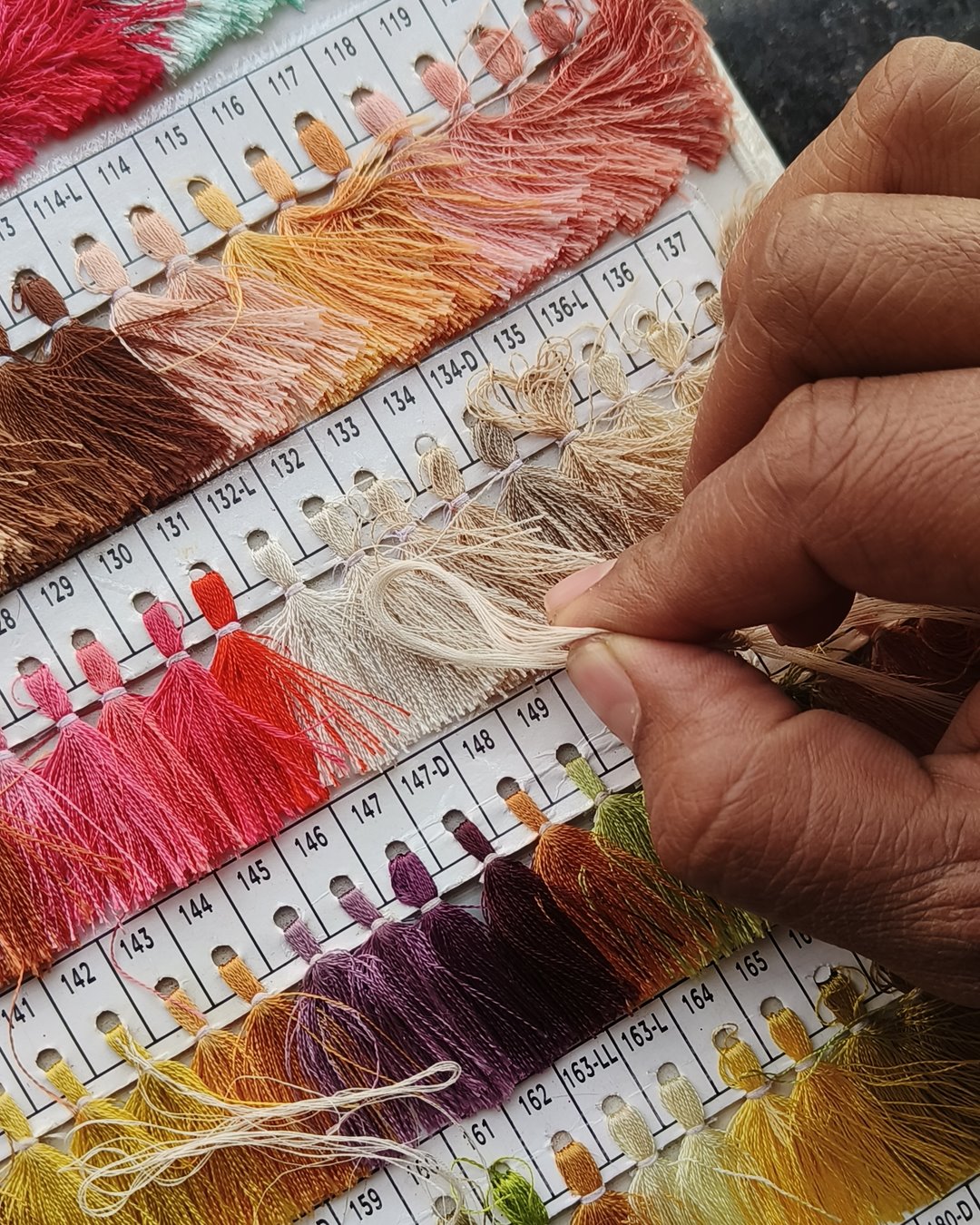
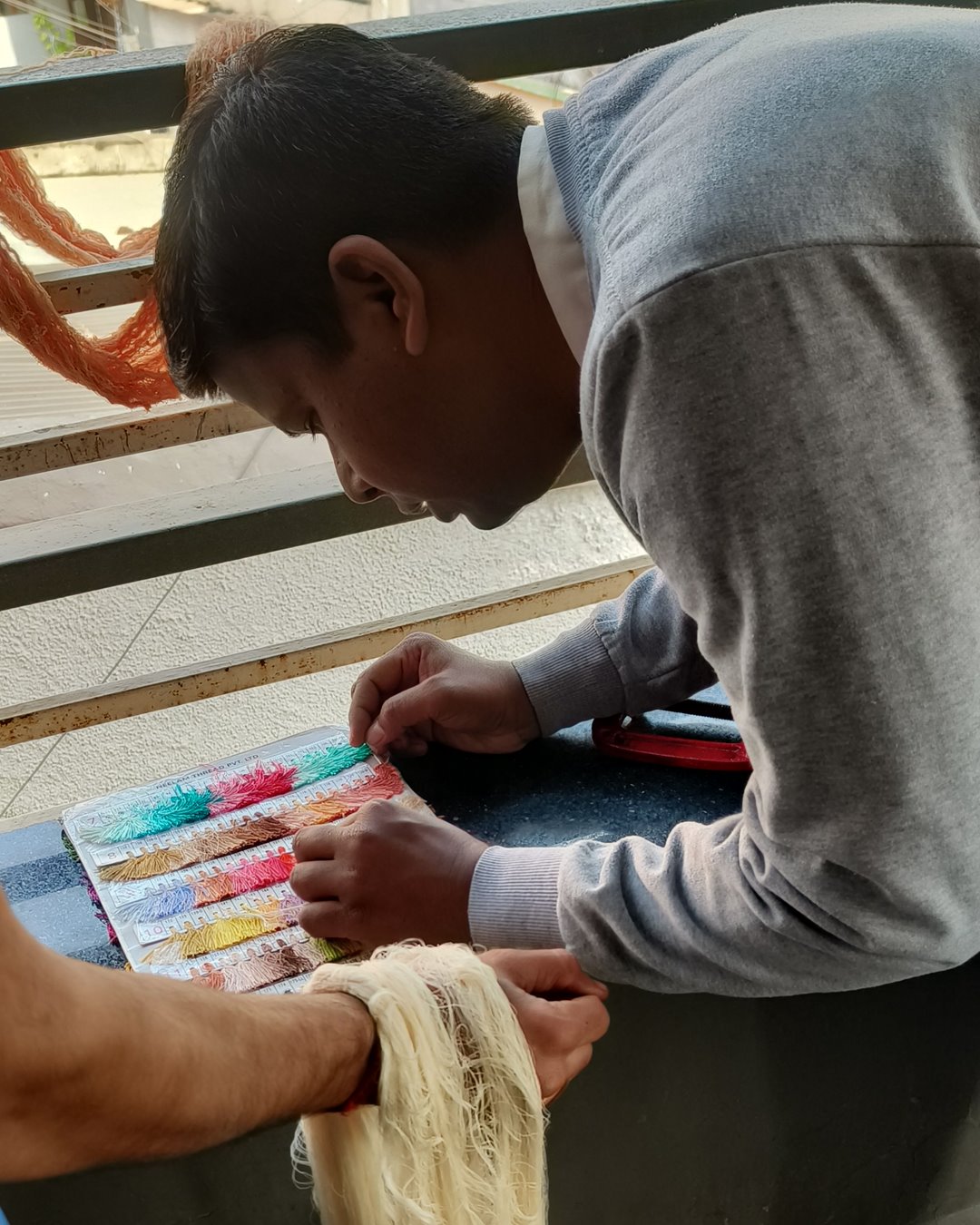
The prepared yarn is sent to our dyers, where each colour is developed carefully to match the required shade. Because our yarn is hand dyed, slight variations in shade are naturally possible. These subtle variations are not imperfections — they are part of the character and beauty of handmade textiles.
Warping and drafting
03
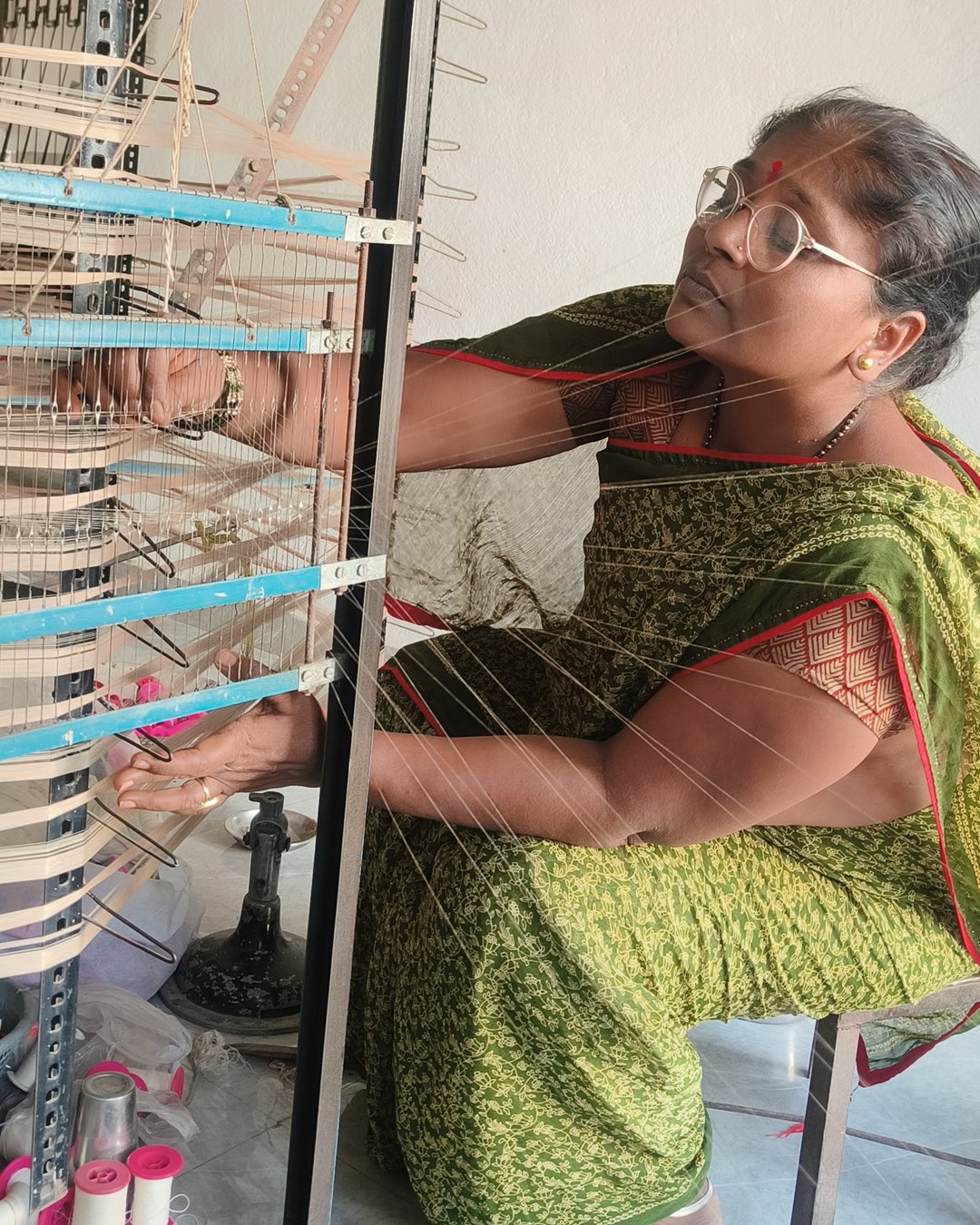
Warping the yarn
Once the dyed yarn returns, it is prepared for warping. The yarn is wound onto bobbins and then arranged on the warping machine to create the warp according to the required design, length and width. Every detail is prepared with care so that the warp is ready to be mounted onto the loom.
04
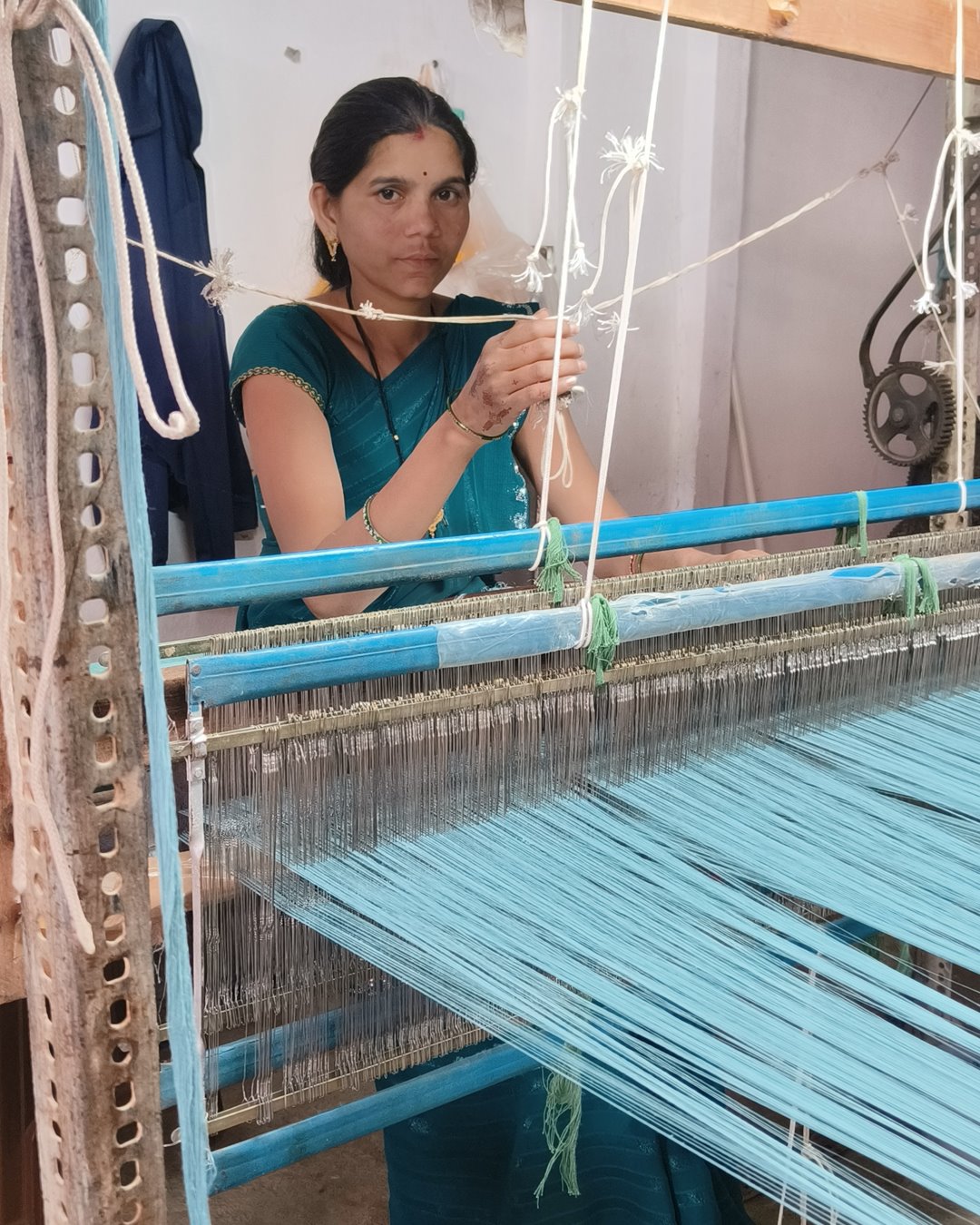
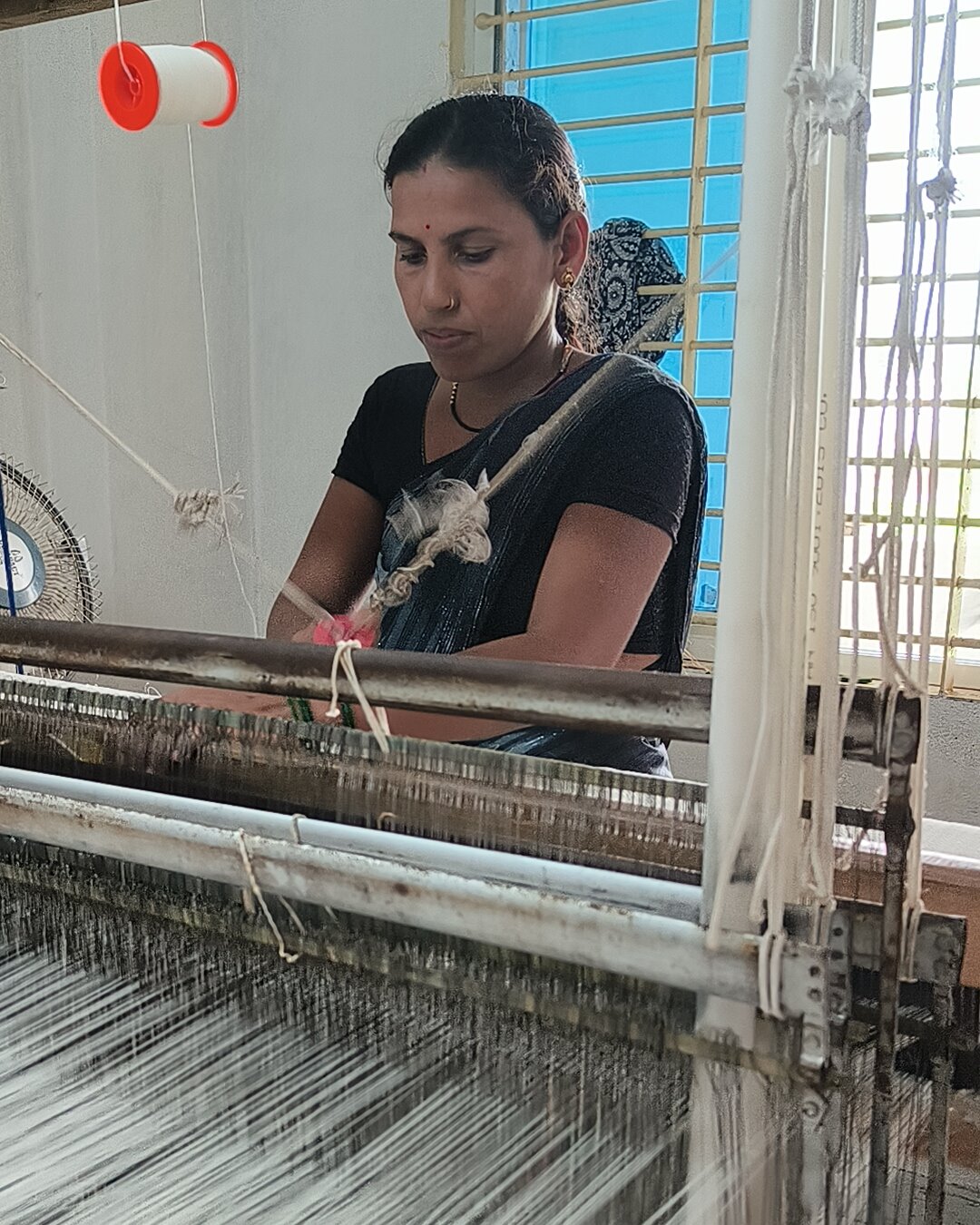
Drafting and pre-loom setup
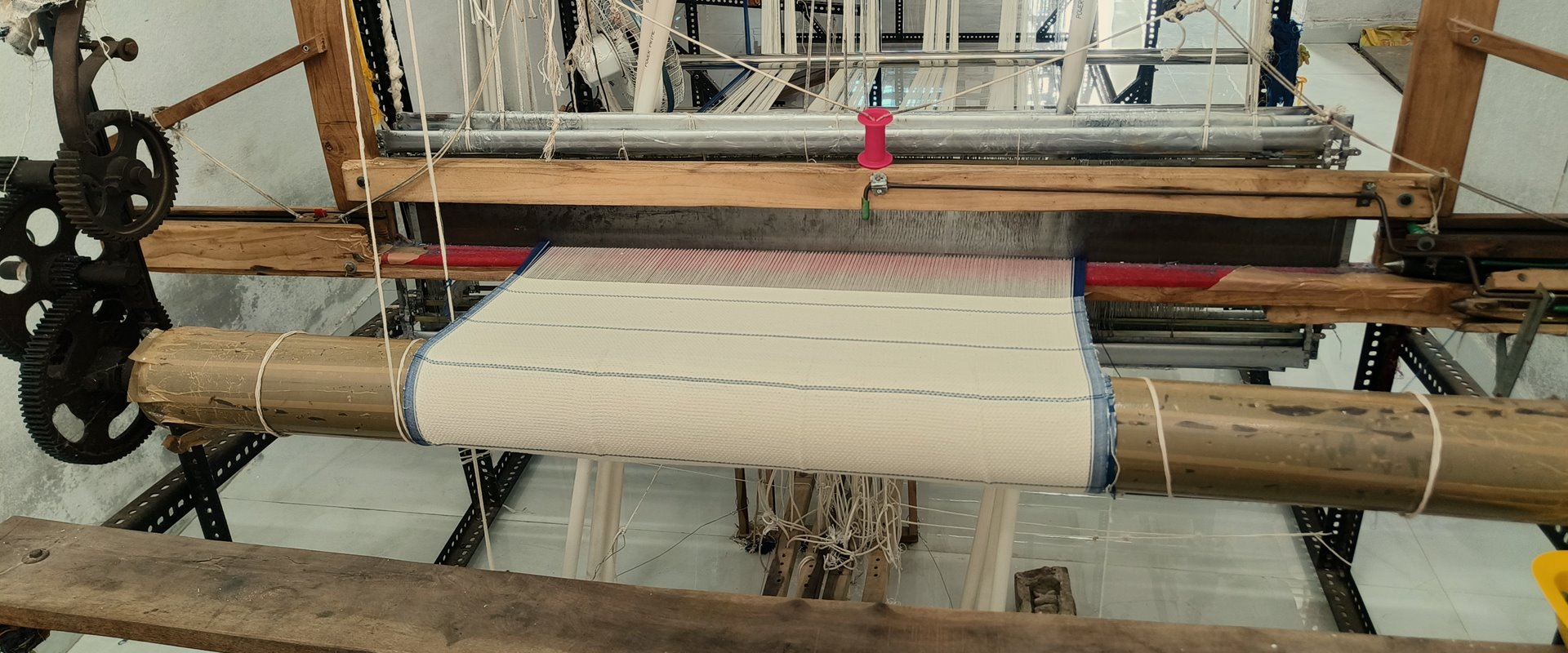
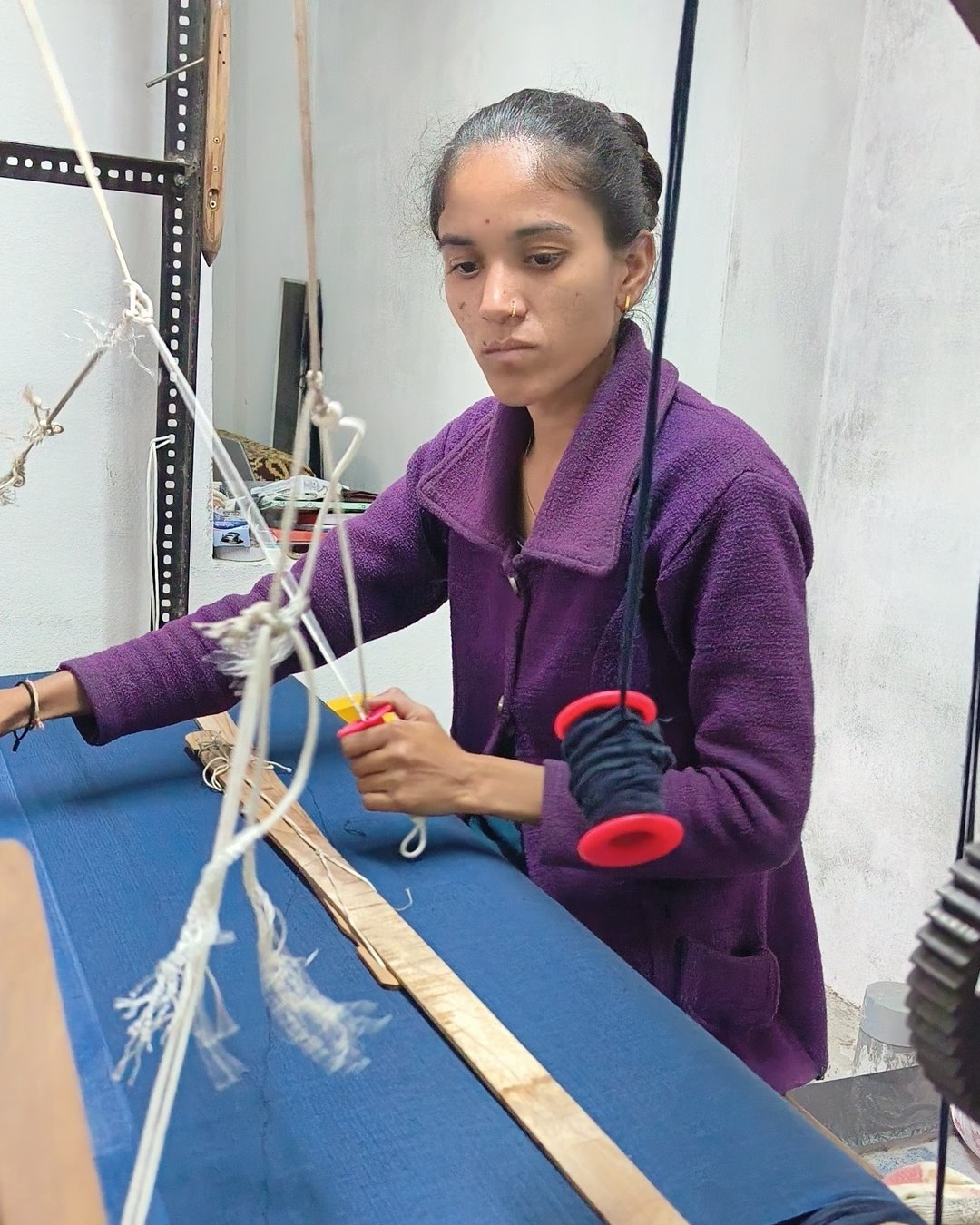
The warp is brought to the loom for drafting and tying, and the loom is prepared according to the design. For designs involving extra-weft work, the additional elements are set and secured during this stage. The first piece off the loom is checked for design, colour and dimensions, and any corrections are made before the next piece is woven.
Final finishing
05
Careful inspection
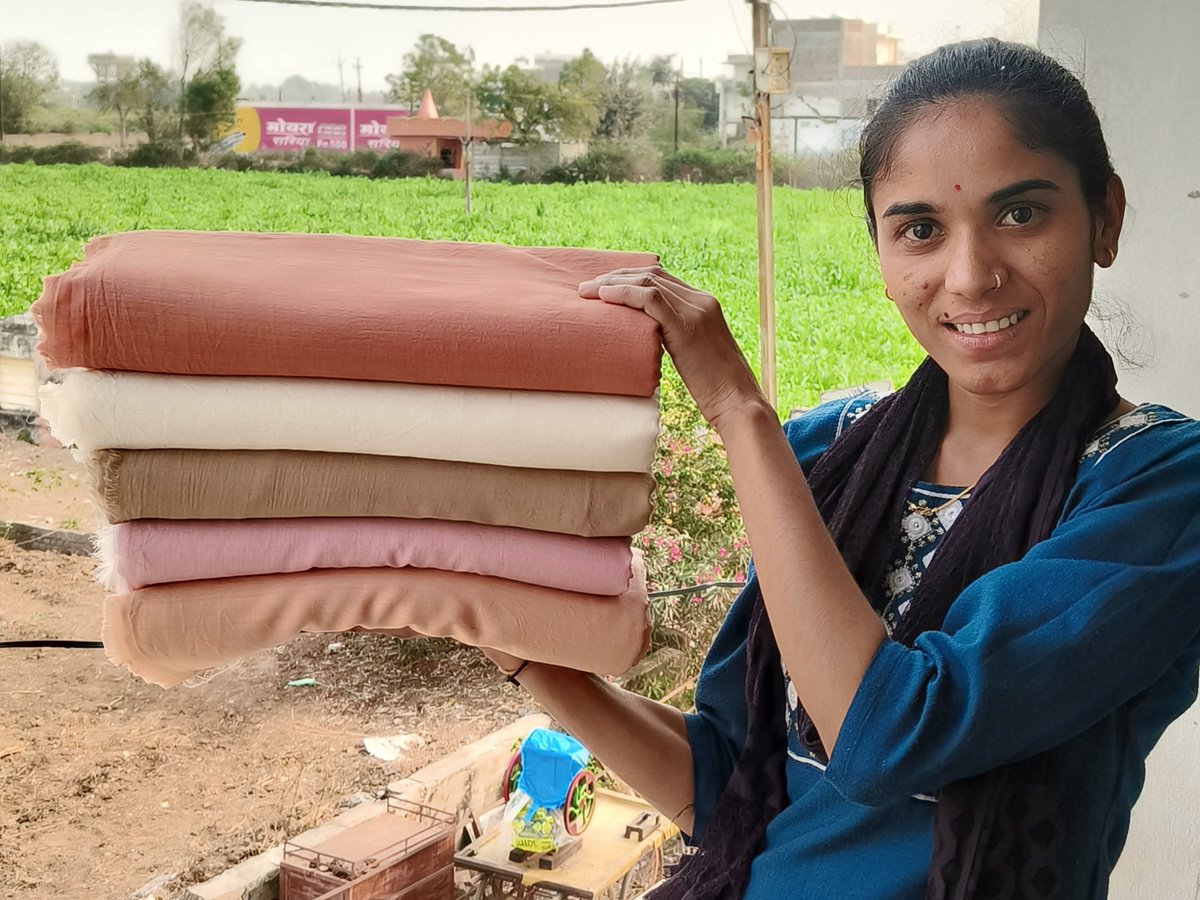
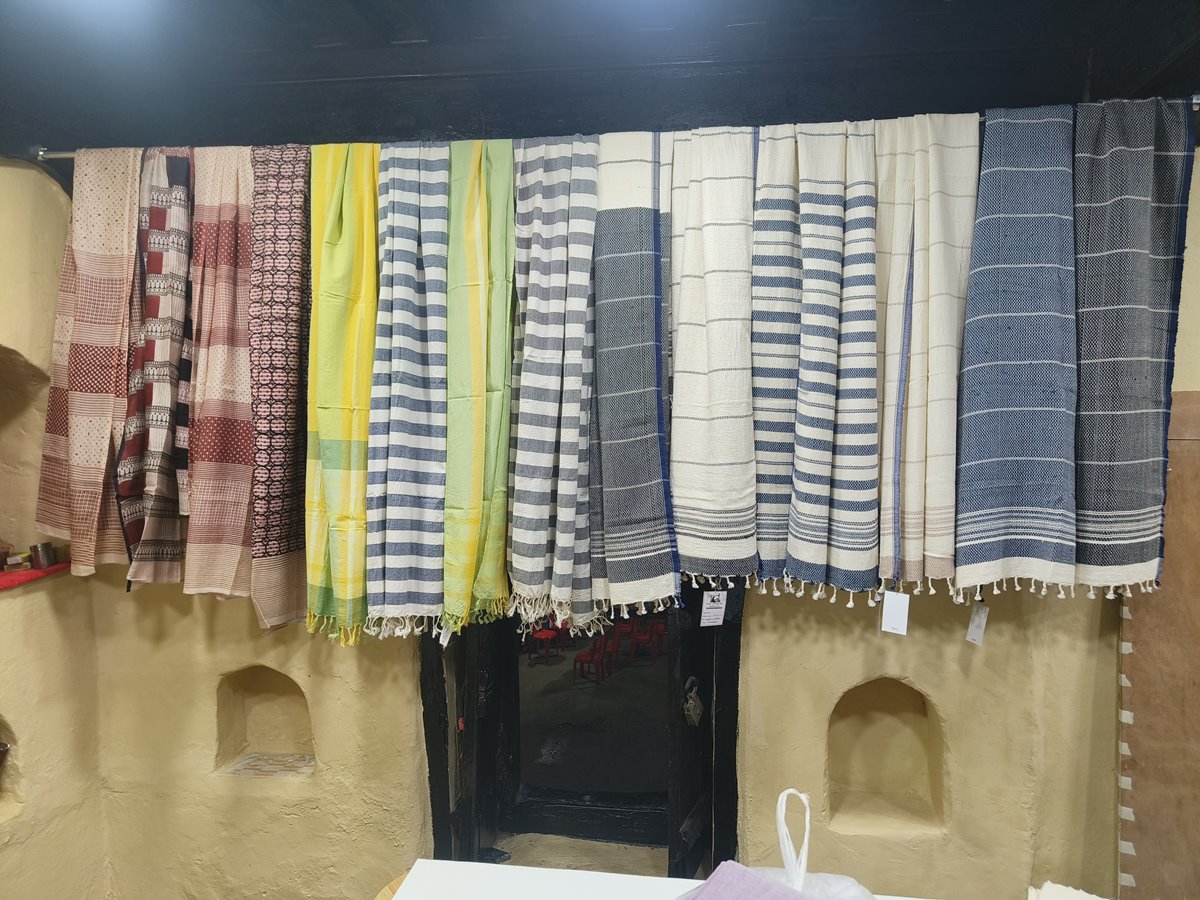
Once the weaving is complete, every textile is inspected by hand. We check the weave, colour, dimensions, selvedges and overall finish to make sure the piece meets the required quality and design.
Caring for handloom
Treat it gently and it will outlast you
- Dry clean zari and silk pieces; hand wash pure cotton cold.
- Dry in shade — direct sun fades hand-dyed colours.
- Press on medium heat with a cotton cloth over the zari.
- Store folded in muslin, and refold along new lines yearly.
- Expect slight irregularities; they are the mark of the hand.